Login
Registered users

The 1960s and ’70s was a period of great experimentation, also in the field of architecture. There was a drive to break out of established patterns and venture into unchartered territory that no one had yet dared explore. Bolstered by their new-found ideologies, architects sought new realms of expression.
In Italy, this brought about a clear polarization: on the one hand, the radicalism of Florentine groups like Superstudio, Archizoom, and UFO; on the other, the austere rigor of the Tendenza architecture movement, led by Aldo Rossi. In the middle, however, were several others who ran counter to both, some to the point of being seen as heretical. Paolo Portoghesi’s position was unique – at least until he fell into the trap of creating cheap postmodern icons. In the early 1960s, he spearheaded a real deconstruction of architectural languages. The result was truly exceptional, his work mixing aspects of “high” architecture with spontaneous, even popular languages. His amazing Santa Marinella tower, built in 1966 in Italy’s Lazio region, stacks what appear to be shanty-town shacks haphazardly poised one on top of the other. Further projects, especially those in partnership with Vittorio Gigliotti, deconstructed his own great passion, Baroque architecture, on which he had written a highly acclaimed book, Roma barocca (1973). The idea was to take the basic Baroque etymology – its moldings and trims – and deconstruct them into components to create curved slabs that never joined, leaving full-height gaps, which then framed windows, these too, full-height. Built in 1969, Portoghesi’s Church of the Holy Family in Salerno may be considered an exemplar of what Bruno Zevi called the poetics of “inflected slabs”. It was a short-lived trend, however, if one leaves aside the work of certain Rome architects close to Zevi.
The subsequent decades saw the rise of post-modernism and its...

Digital

Printed



In Dialogue with Nature
Kjetil Trædal Thorsen
In his editorial, “In Dialogue with Nature,” Kjetil Trædal Thorsen discusses Snøhetta’s vision of the relationship between nature and architec...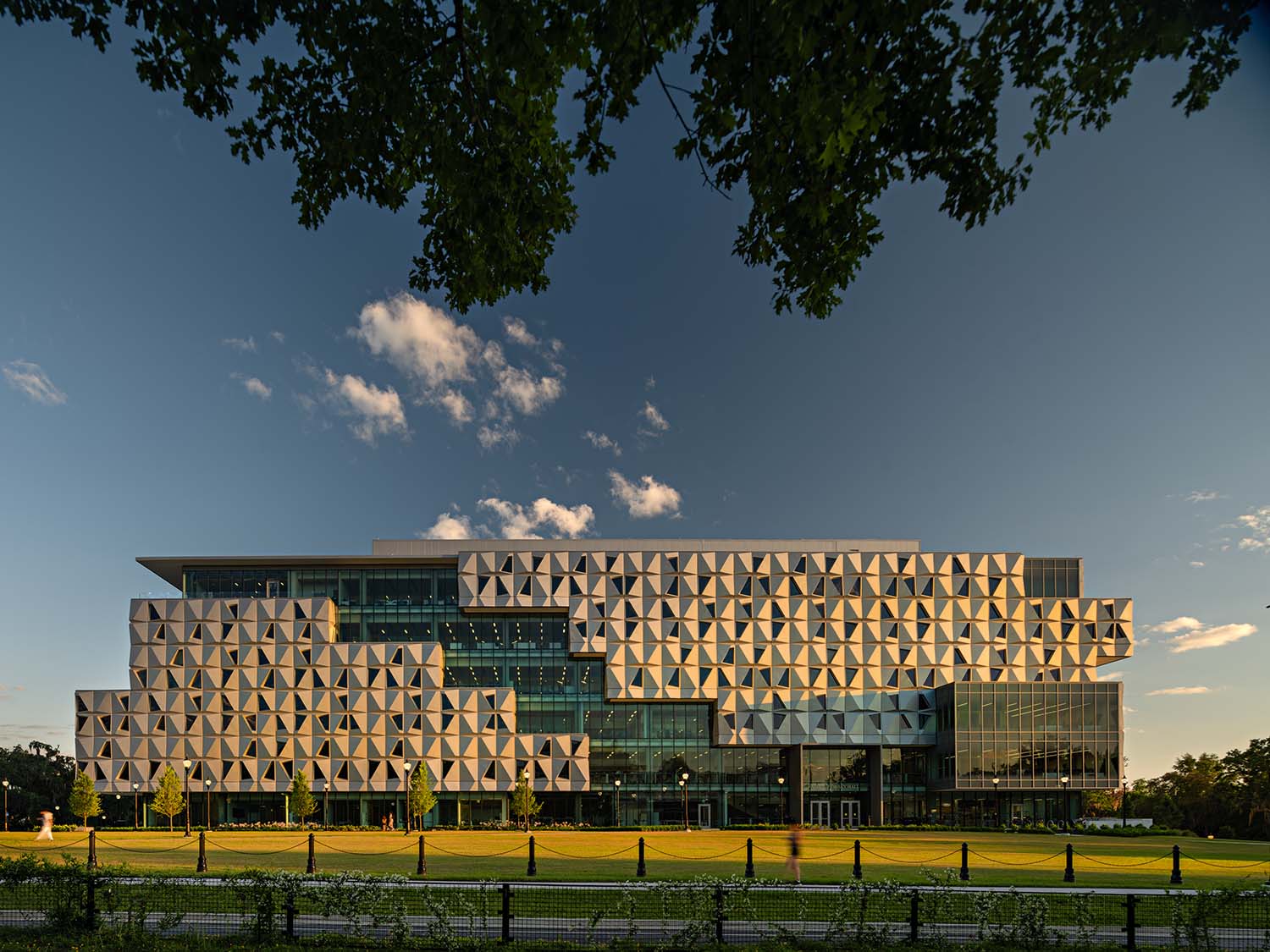
Malachowsky Hall, University of Florida
Bohlin Cywinski Jackson
In the Highlights column, Michael Webb looks at Malachowsky Hall in Gainesville, designed by Bohlin Cywinski Jackson...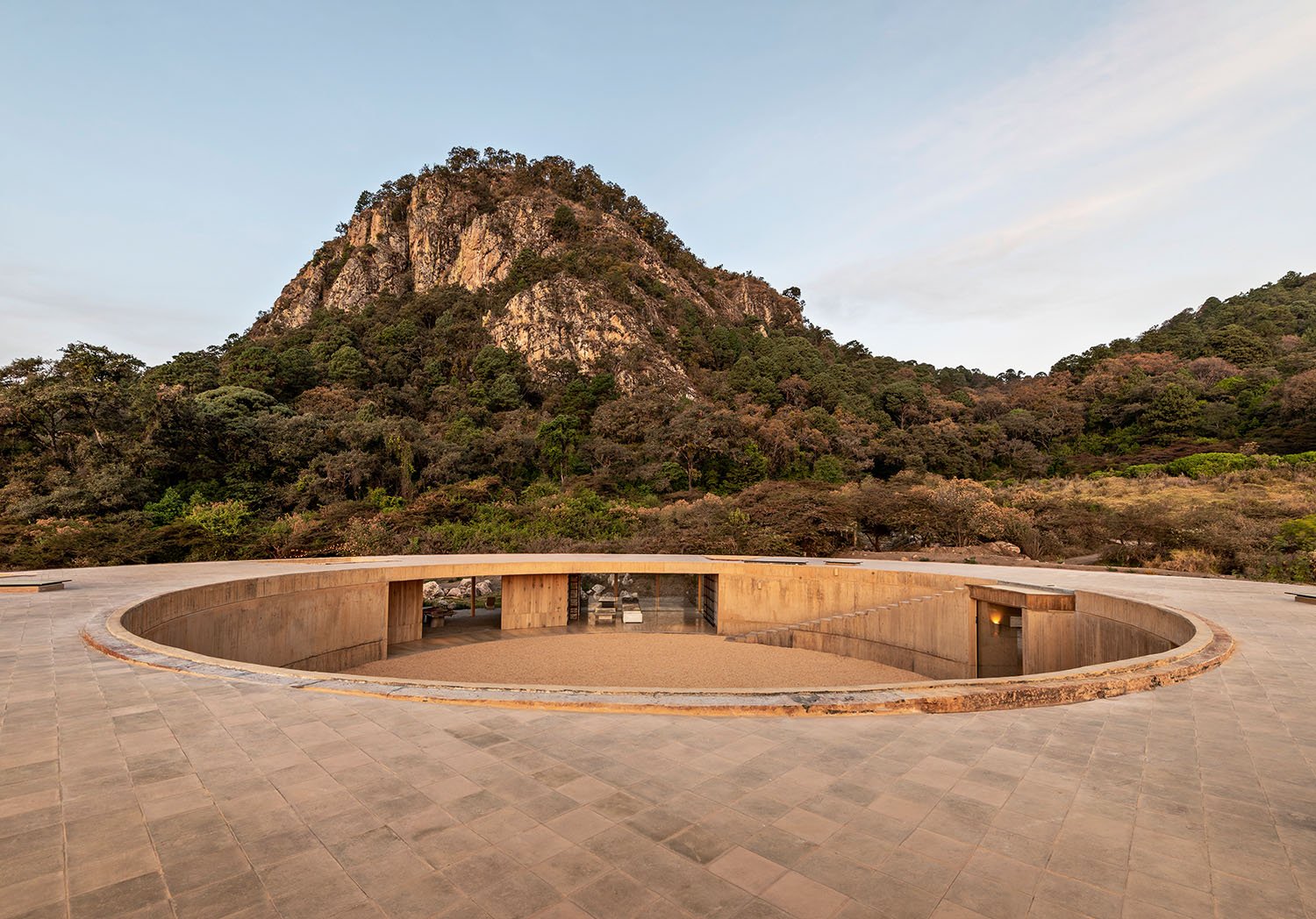
Casa 720
Fernanda Canales
In this issue’s Letter from America column, Raymund Ryan talks about Fernanda Canales’ Casa 720 in Tehuastepec, Mexico...