The Commercial Retrofit of an Abandoned Hotel in Dali
Pleasant Hill (Shanghai) Architectural Design Co., Ltd.
Renovation
/
Future
Dali, with its mild climate and stunning scenery, is famed for the poetic charm of “Wind, Flowers, Snow, and Moon” — the wind of Xiaguan, all-time blossoms, Cangshan’s snow, and the moon over Erhai.
Our site sits on a hillside along Erhai’s eastern shore, facing the Erhai lake and Cangshan Mountain. From here, one can view the snow peaks and shimmering waters, just across the road from the Erhai Ecological Corridor.
Inspired by this rich natural setting, we extend the corridor’s greenery into the site, transforming a long-abandoned hotel into an open, meandering commercial space. Visitors stroll through alley-like passages, immersed in a living, poetic landscape.
Ultimately, the project presents a fusion of urban life and natural beauty—an everyday “pastoral dream” within the city.
Community Wish List Special Prize
Votazioni chiuse
The project actively responds to the surrounding natural and cultural resources. We extend the greenery of the Erhai Ecological Corridor into the site to create a natural transition. On the hillside side of site stands a Bai Benzhu Temple. In the plaza between the temple and the project, we drew inspiration from the temple’s traditional Chinese overhanging eaves design and used modern materials to create an open, small-scale wedding venue.Moreover, the project goes beyond the site itself by collaborating with municipal authorities to connect the Erhai Ecological Corridor, the site, the Benzhu Temple, and the hillside viewing platform. This forms a “vitality loop” that links cultural landmarks with natural landscapes, activating the public character and urban life of the entire area.
Sustainability and eco-compatibility are central to the project’s design strategy. All building materials were sourced locally from Dali and nearby regions, reducing transportation emissions and supporting the regional economy.
Responding to Dali’s intense UV exposure and lush vegetation, we used climbing plants and native vines across the public area upper frame. These not only create a poetic and immersive atmosphere, but also serve as natural sunshades, improving thermal comfort.
Inside the building, a central courtyard acts as a natural climate regulator, enhancing airflow and daylighting while reducing the need for mechanical cooling. Through these passive strategies and local sourcing, the project harmonizes ecological sensitivity with architectural expression.
Located in Dali, Yunnan, this project transforms a 9,600-square-meter abandoned hotel facing the Cangshan Mountains and Erhai Lake. Inspired by the idea of an “urban pastoral dream,” the design envisions a non-standard commercial space that integrates nature, culture, and the local community.
The original structure is preserved, with previously enclosed areas opened up. The central grand staircase has been redesigned as a public passage linking the site entrance with the residential neighborhood on the hillside. Alleyway-like circulation weaves between the buildings, creating a relaxed and meandering street experience.
In coordination with the municipal government, the project connects the Erhai Ecological Corridor, the site, a nearby Bai ethnic Benzhu Temple, and a scenic hillside platform—forming a “loop of vitality” that links cultural and natural landmarks. The façades are covered in climbing greenery, responding to Dali’s strong sunlight and lush environment.
More than just a commercial renovation, the project is a gentle reconnection between the city and nature. It does not seek to dominate the landscape, but to quietly immerse itself into Dali’s everyday poetry of wind, flowers, snow, and moon.
Dali, with its stunning landscape and mild climate, blends minority traditions with Confucian cultural depth. Its rich history and natural abundance continue to draw both young dreamers and cultural seekers.
Here, pastoral living, artistic exploration, and quiet retreat coexist. In our spaces, nature meets culture, and urban life flows gently into poetic serenity—where city and countryside are just a step apart.
/21
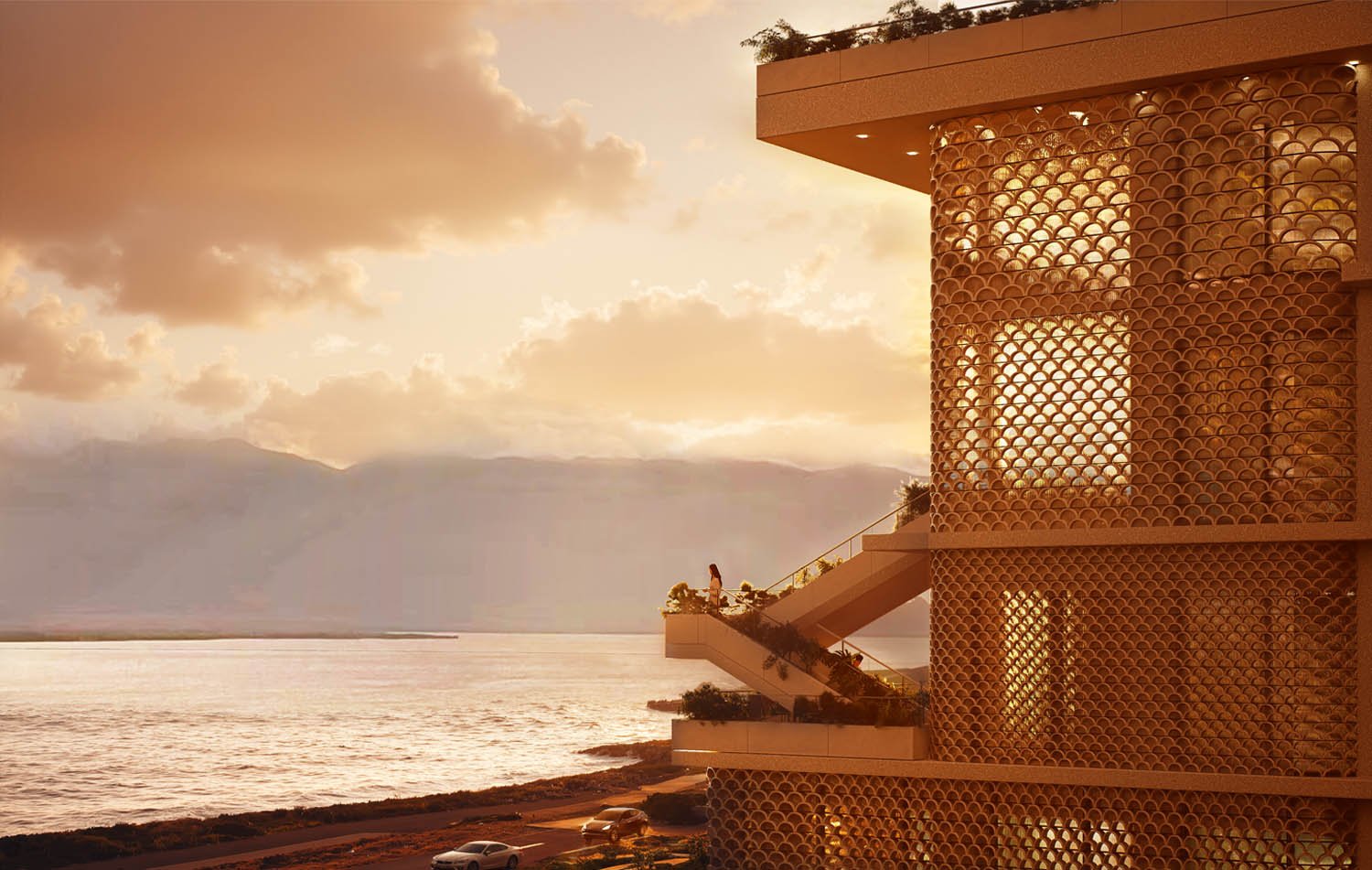
stands on the staircase along the façade, gazing out at Cangshan Mountain and Erhai Lake.
Pleasant Hill Design, Shanghai
Comparison between the current site and the proposed
Pleasant Hill Design, Shanghai
street view
Pleasant Hill Design, Shanghai
street view
Pleasant Hill Design, Shanghai
Public Space on the innal terrace
Pleasant Hill Design, Shanghai
The shop terrace overlooks Cangshan Mountain and Erhai Lake.
Pleasant Hill Design, Shanghai
public space
Pleasant Hill Design, Shanghai
small plaza on 3F
Pleasant Hill Design, Shanghai
small plaza on 3F
Pleasant Hill Design, Shanghai
public space
Pleasant Hill Design, Shanghai
The plaza between the Benzhu Temple and the building can host small weddings
Dali
中国
Confidential
Commercial Space
12/2026
9600 m2
Confidential
Yijun Wang
Yijun Wang, Yi li, Zhehui Chang, Qi Zhang, Yuxin Lai, Shen Yuan, Ruizhe Hou
Jiujing
Bio
Pleasant Hill Design P.H.D. is a young and creative design studio specializing in architecture and interior design. Founded by a team of Harvard and Columbia graduates with years of experience at world-renowned firms, our partners have contributed to many iconic projects around the globe. Upon returning to China, we established Pleasant Hill with a mission to blend international vision with local context. We strive to create memorable spatial experiences, places of emotional connection, and distinctive architectural works that resonate deeply with people.
We believe architecture is a framework we set for activities, objects, and people—each connected in visible and invisible ways. It is a vessel that supports and catalyzes feelings, memories, intimacy, and human interaction. To us, the most meaningful part of being an architect is activating places and nurturing the emotional bond between people and the spaces they inhabit.