Accedi
Utenti registrati

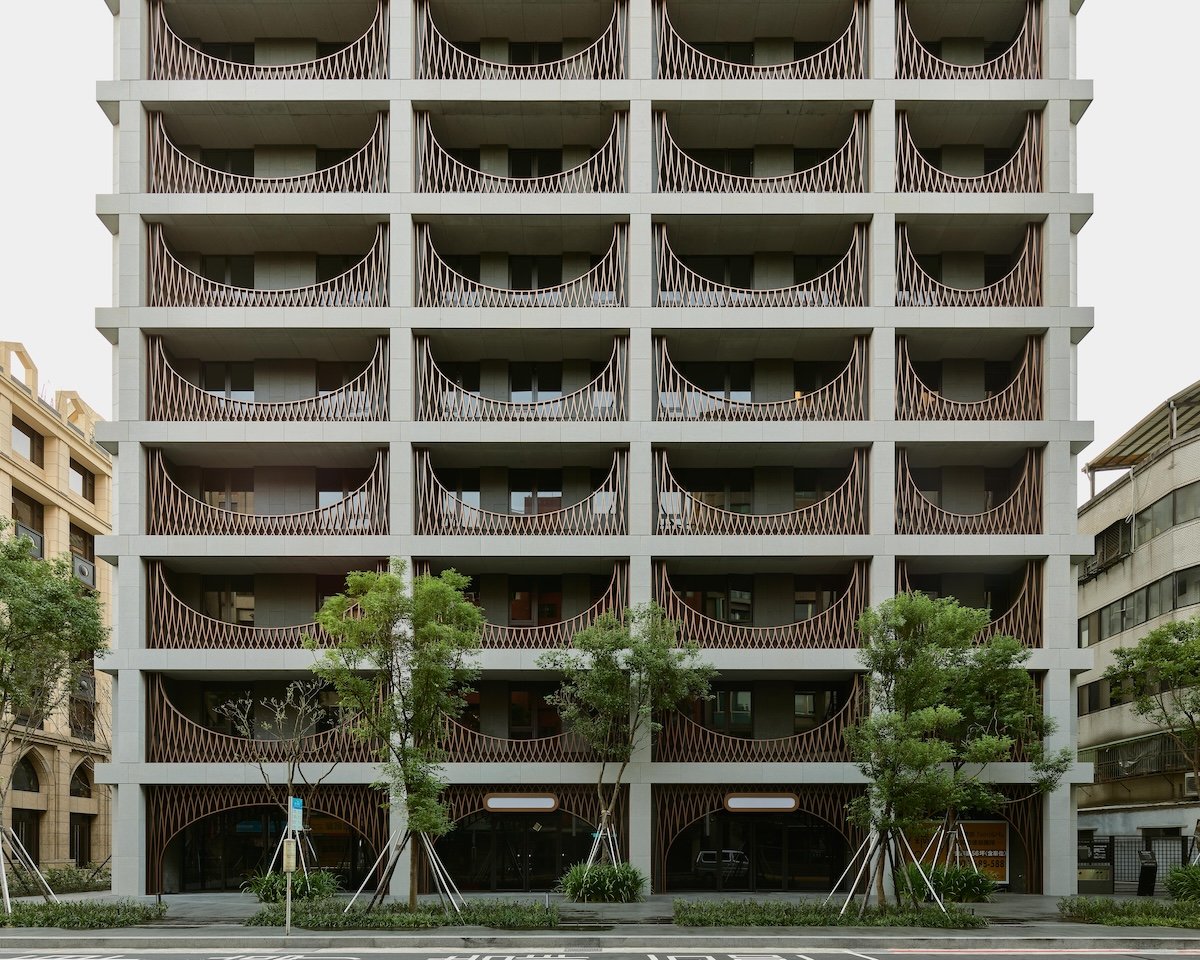
Inspired by the many “flower grid” screens found on top of windows in old buildings throughout Taiwan, Neri&Hu reinterprets this recognizable feature on a larger scale with a refined pattern and luxurious material. The design blends modernism with traditional cultural elements, creating a distinctive and sophisticated visual identity. The elevation is simply expressed with a grid of elegantly proportioned columns and beams clad in light gray stone, with an open corner detail to bring some lightness to the expression of the structural framing. Within each frame of the grid, an inverted catenary arch-shaped screen of copper-toned metal is inserted to enclose balconies and layer upon the glazing behind.
Votazioni chiuse


The project site is located in Zhishan, part of Tianmu in Shilin district, which has a particularly rich cultural background. It was a gateway for foreign cultures, and still today, it is the neighborhood where most international schools are located. Residents of Tianmu are proud of this cross-cultural identity and enjoy a slow-living lifestyle that is removed from the bustle of more commercial areas in the city. In this context of Taipei and Zhishan, Neri&Hu’s design intent for a high-end residential building was to embody a timeless aesthetic through the use of tectonic forms and tactile materials.

Sustainability was addressed through a sensitive approach to climate, culture, and materiality. The saw-toothed southern façade maximizes natural light and ventilation, reducing energy use. Deep balconies with copper-toned metal screens offer solar shading and privacy, inspired by local “flower grid” vernacular. Locally sourced light grey stone and terrazzo reduce embodied carbon, while lush rooftop plantings contribute to urban greening and microclimate regulation. The project celebrates longevity through timeless design and durable, low-maintenance materials.

With setbacks in consideration, the building massing strategy was to hold a strong squared edge on the north corner to maintain a bold presence along the street, while the south side of the building is softened by its saw-toothed footprint. The elevation is simply expressed with a grid of elegantly proportioned columns and beams clad in light gray stone, with an open corner detail to bring some lightness to the expression of the structural framing. Within each frame of the grid, an inverted catenary arch-shaped screen of copper-toned metal is inserted to enclose balconies and layer upon the glazing behind. Inspired by the many “flower grid” screens found on top of windows in old buildings throughout Taiwan, Neri&Hu reinterprets this recognizable feature on a larger scale with a refined pattern and luxurious material. Upon entering, one is greeted in a double height arched space clad in warm gray terrazzo, a material which continues into the mailbox area, lift lobby, and lounge space that is highlighted by a custom bronze and hand-blown glass pendant installation. On the second floor a small library overlooks the lounge and also features a wide arching proportion, reminiscent of the arcades found in old buildings.

By incorporating elements inspired by local architectural traditions, such as reinterpreted "flower grid" screens from older Taiwanese buildings, the design ties the structure to its cultural context, creating a dialogue between past and present. Through its timeless aesthetic, "The Lattice" becomes a modern yet respectful landmark that resonates with the community’s pride in its cross-cultural identity.


Founded in 2006 by Lyndon Neri and Rossana Hu, Neri&Hu Design and Research Office is a Shanghai-based interdisciplinary architectural practice with studios in London, Paris, and Milan. Drawing from cultural, historical, and urban contexts, the practice explores a wide spectrum of scales and disciplines. Its diverse team reflects a global worldview and a commitment to redefining architectural paradigms. Rooted in research, Neri&Hu’s design ethos centers on the dynamic interplay of experience, material, detail, form, and light—creating architecture that is both culturally resonant and experientially rich. Neri&Hu and their designs have been recognized by a number of prestigious international awards.